
Best Bathroom Flooring for Wet Areas: Materials Guide
The best flooring for bathrooms combines moisture resistance, slip safety, durability, and easy maintenance. Porcelain tile is a popular choice for homeowners who want a durable surface, while ceramic tile, waterproof luxury vinyl plank (LVP), sheet vinyl, and natural stone offer different benefits depending on the bathroom's layout and water exposure.
Choosing the right bathroom flooring options requires more than comparing colors and designs. The main bathroom floor, the area around a bathtub, and a shower floor experience different levels of moisture. The material and installation method should match those conditions.
If you are planning a bathroom renovation, compare the following five flooring materials to determine which one best suits your space, maintenance preferences, and design goals.
What Should You Look for in Bathroom Flooring?
Before selecting a material, consider how the floor will perform during everyday use. The right choice should handle moisture while remaining practical to clean and maintain.
1. Moisture Resistance
Bathroom floors regularly encounter splashes, humidity, and spills. Water can also seep through damaged seams, grout joints, and poorly sealed edges.
Waterproof bathroom flooring can help reduce moisture-related problems, but the flooring surface alone does not guarantee that the entire floor assembly is waterproof. Proper substrate preparation, perimeter detailing, and waterproofing are especially important in showers and wet rooms.
2. Slip Resistance
Water, soap, and shampoo can make bathroom floors slippery. Look for slip-resistant bathroom flooring designed for the intended application.
For tile, review the manufacturer's wet-use specifications and surface finish. Textured or matte finishes may be appropriate in certain applications, but no flooring material is completely slip-proof under every condition.
3. Durability
Bathroom flooring must withstand daily foot traffic, regular cleaning, and occasional impacts. Porcelain tile is known for its durability, while vinyl flooring offers a more flexible surface that can be comfortable underfoot.
The performance of any material depends on its quality, installation, and suitability for the room.
4. Maintenance
Consider how much time you want to spend cleaning the floor. Tile surfaces are generally straightforward to clean, but grout requires attention. Natural stone may need periodic sealing, depending on the material.
Vinyl flooring is often easier to maintain, although damaged seams and edges should be repaired promptly.
5. Comfort and Appearance
Some homeowners prefer the solid feel of tile, while others want a warmer surface underfoot. Vinyl offers wood-look and stone-look designs, and natural stone provides distinctive patterns.
Choose a material that complements your bathroom design without compromising moisture protection or safety.
5 Best Bathroom Flooring Options Compared
The following options suit different bathroom layouts and household needs.
| Flooring Material | Main Benefit | Potential Limitation | Best Application |
|---|---|---|---|
| Porcelain tile | Durable and highly moisture-resistant | Hard and potentially cold | Main bathroom floors and suitable shower installations |
| Ceramic tile | Wide range of styles | Performance varies by product | Main bathroom floors and approved wet areas |
| Luxury vinyl plank or tile | Comfortable and available in many designs | Seams and edges require proper installation | Suitable main bathroom floors |
| Sheet vinyl | Fewer seams across the floor | Can be punctured or damaged | Main bathroom floors with appropriate installation |
| Natural stone | Distinctive, premium appearance | May require sealing and specialized care | Carefully selected bathroom applications |
1. Porcelain Tile: A Durable Bathroom Flooring Choice
Porcelain tile bathroom flooring is a strong option for homeowners who prioritize durability and moisture resistance. It comes in numerous sizes, colors, textures, and patterns, including finishes that resemble marble, slate, and hardwood.
Large-format tiles can create a clean appearance in the main bathroom, while smaller mosaic tiles can accommodate the slopes required for many shower floors.
Advantages of porcelain tile:
- Low water absorption when the tile meets porcelain classification requirements.
- Durable surface for everyday household use.
- Available in a variety of colors and finishes.
- Compatible with many bathroom design styles.
- Suitable for many properly designed bathroom installations.
Potential limitations:
- Hard surfaces may feel cold underfoot.
- Some finishes can become slippery when wet.
- Grout joints need regular cleaning.
- Installation requires a suitable substrate and proper detailing.
Porcelain is often a practical choice for family bathrooms and primary bathrooms. For shower floors, confirm that the specific tile is rated for the intended application and works with the shower's slope and drainage design.
2. Ceramic Tile: Versatile and Easy to Maintain
Ceramic tile flooring offers flexibility for homeowners who want a tiled bathroom in a particular color, shape, or pattern. It can complement modern, traditional, and transitional bathroom designs.
Ceramic and porcelain tiles share several characteristics, but they differ in water absorption and other product specifications. Not every ceramic tile is suitable for every wet area.
Advantages of ceramic tile:
- Numerous styles, colors, and patterns.
- Easy-to-clean surface.
- Durable when properly selected and installed.
- Works well with many bathroom fixtures and finishes.
Potential limitations:
- Some products are unsuitable for shower floors.
- Smooth surfaces may become slippery.
- Grout requires maintenance.
- Tile can feel hard when standing for long periods.
When comparing bathroom flooring options, choose ceramic tiles specifically approved for floor use. Ask the supplier whether the product is appropriate for your bathroom's moisture levels and expected foot traffic.
3. Waterproof Luxury Vinyl Plank and Tile: Comfortable Underfoot
Waterproof luxury vinyl plank (LVP) and luxury vinyl tile (LVT) are popular alternatives to traditional tile. They can imitate wood, stone, and other decorative surfaces while providing a softer feel underfoot.
These materials can be useful in bathrooms where comfort and easy routine cleaning are priorities.
Advantages of luxury vinyl:
- Generally warmer and softer underfoot than tile.
- Available in wood-look and stone-look designs.
- Easy to clean with suitable products.
- Offers multiple styles for different bathroom designs.
Potential limitations:
- Sharp objects can damage the surface.
- Poorly installed seams may allow moisture to reach the subfloor.
- Uneven subfloors can affect installation.
- Not every product is suitable for showers or continuously wet areas.
Even when a product is labeled waterproof, the complete floor is not necessarily watertight. Follow the manufacturer's instructions around toilets, bathtubs, plumbing penetrations, and room transitions.
Ordinary click-lock vinyl planks should not be used as a shower-pan surface. Shower installations require a purpose-designed waterproofing and drainage system.
4. Sheet Vinyl: Practical for Main Bathroom Floors
Sheet vinyl flooring is installed in broad sections rather than individual planks or tiles. This can reduce the number of seams across a bathroom, making it a practical option for certain residential installations.
It is available in many colors and decorative patterns, and its relatively soft surface can feel more comfortable than hard tile.
Advantages of sheet vinyl:
- Fewer seams across many installations.
- Comfortable underfoot.
- Relatively simple routine maintenance.
- Multiple design choices.
Potential limitations:
- Sharp objects can puncture the surface.
- Subfloor imperfections may show through.
- Repairs may be difficult to blend.
- Poorly sealed edges can allow moisture to reach underlying materials.
Sheet vinyl can work well for a main bathroom floor when the product is approved for the intended environment. Confirm the requirements for adhesives, seams, edges, and fixtures before installation.
5. Natural Stone: A Premium Bathroom Flooring Option
Natural stone bathroom flooring includes materials such as marble, granite, slate, and travertine. Each has its own appearance, texture, absorption characteristics, and maintenance requirements.
Stone can create a distinctive finish, especially when coordinated with a matching vanity, shower walls, or other bathroom features.
Advantages of natural stone:
- Unique natural patterns.
- Premium appearance.
- Different colors and surface textures.
- Suitable options for many custom bathroom designs.
Potential limitations:
- Some stones absorb moisture and require sealing.
- Certain finishes can be slippery when wet.
- Cleaning products must be compatible with the stone.
- Maintenance requirements vary by material.
Before selecting natural stone for a shower or another frequently wet area, confirm that the specific stone and finish are appropriate for the application. Follow the manufacturer's recommendations for sealing and cleaning.
What Is the Best Flooring for a Shower Floor?
Porcelain or ceramic mosaic tile is often a practical choice for a shower floor when the product is suitable for wet use and installed over a properly constructed shower base.
Smaller tiles can accommodate sloped surfaces more easily than many large-format tiles. Additional grout joints may provide more opportunities for traction, but grout alone does not guarantee slip resistance.
When selecting shower flooring, consider these factors:
- Slip resistance: Check the surface characteristics and wet-use specifications.
- Drainage: The floor must slope correctly toward the drain.
- Waterproofing: The shower base, membrane, and connections must form a compatible system.
- Maintenance: Consider grout cleaning and the care required by the chosen material.
- Installation: Make sure the tile and layout suit the shower design.
A shower floor has different requirements from the main bathroom floor. Choose materials based on the intended use rather than appearance alone.
What Is the Best Flooring Around a Bathtub?
The best flooring around a bathtub depends on how frequently water splashes onto the surface.
Porcelain tile is a versatile choice because it is durable and available in many finishes. Luxury vinyl or sheet vinyl may also work for appropriate installations when permitted by the manufacturer's instructions.
Pay particular attention to the edges around the tub, plumbing openings, and transitions between flooring materials. Repeated water exposure in these areas can damage the subfloor even when the visible surface appears undamaged.
For freestanding bathtubs, consider where water may drip during bathing and cleaning. Select flooring and installation details that can handle the expected moisture.
Which Bathroom Flooring Is Safest When Wet?
No material is automatically slip-proof. Safety depends on the surface finish, wet-use suitability, drainage, cleaning, and the conditions in which the flooring is used.
When evaluating slip-resistant bathroom flooring, ask the supplier or installer:
- Is this product suitable for the intended wet area?
- Are wet-use test results or relevant product specifications available?
- Is the finish recommended for shower floors or only for general bathroom use?
- Will the installation provide adequate drainage?
- Are additional accessibility features needed?
A textured or matte porcelain tile may be a suitable starting point, but the exact product must be evaluated. Households with children, older adults, or people with mobility limitations should also consider lighting, grab bars, and accessible transitions.
What Bathroom Flooring Materials Should You Avoid?
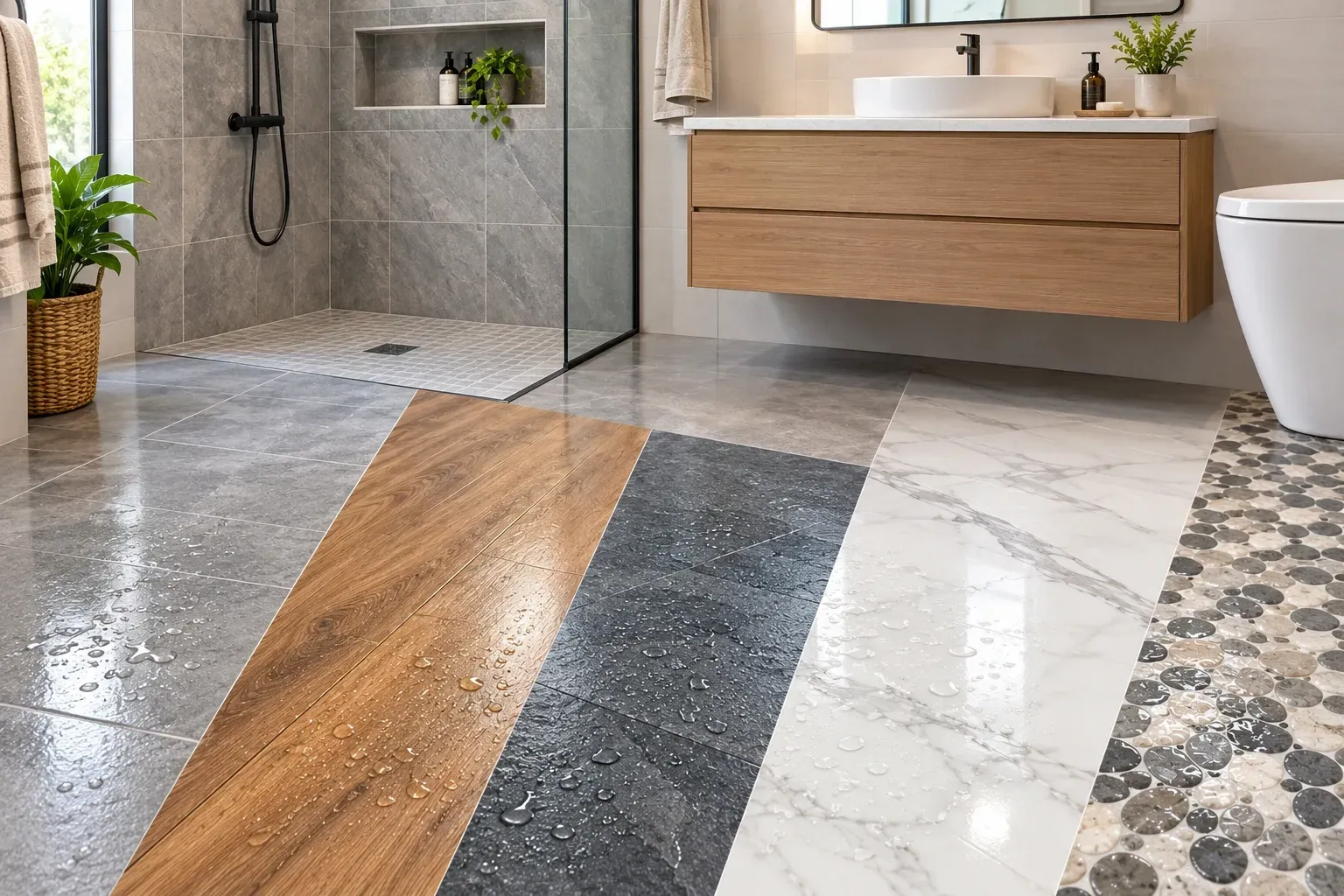
Some flooring materials require extra caution in bathrooms with frequent moisture.
Solid hardwood: Repeated exposure to water can cause swelling, warping, or finish damage. It is generally not the first choice for bathrooms with frequent splashes.
Standard laminate: Many laminate products have wood-based cores that can swell if water enters the seams. Only consider products specifically approved for the intended bathroom application.
Carpet: Carpet can retain moisture and is difficult to keep dry in persistently wet areas. It is generally unsuitable for shower floors.
Unsuitable natural stone: Certain stones and finishes may not perform well in wet conditions without appropriate treatment and maintenance.
Always review the manufacturer's guidance rather than assuming that a product labeled water-resistant is suitable for a shower or wet room.
How to Choose the Right Bathroom Flooring
Use these steps to narrow down your options before purchasing materials.
Step 1: Identify the wet areas. Determine whether the floor will experience direct shower spray, bathtub splashes, or only occasional moisture.
Step 2: Set your priorities. Decide whether durability, comfort, appearance, ease of cleaning, or accessibility matters most.
Step 3: Review product specifications. Check moisture resistance, slip performance, approved applications, and maintenance requirements.
Step 4: Inspect the existing floor. Look for loose tiles, damaged grout, lifting vinyl, soft spots, or signs of moisture beneath the surface.
Step 5: Plan the installation. Confirm the substrate, waterproofing requirements, drainage, transitions, and perimeter details.
Step 6: Coordinate the design. Match the flooring with the vanity, bathtub, shower walls, lighting, and fixtures.
Step 7: Understand ongoing maintenance. Determine how to clean the material and whether grout or stone needs periodic care.
Planning these details before installation can help prevent avoidable problems and create a bathroom that works well for everyday use.
Why Professional Bathroom Flooring Installation Matters
Even high-quality flooring can fail if it is installed over an unsuitable substrate or without the necessary moisture protection. Common issues include loose tiles, damaged grout, water infiltration, uneven surfaces, and deterioration of underlying materials.
Professional planning is particularly important for showers, curbless showers, and wet rooms, where waterproofing and drainage must work together.
Before installation begins, confirm that the plan addresses:
- Subfloor condition and preparation.
- Suitable underlayment or substrate.
- Waterproofing membranes and connections where required.
- Drain placement and floor slope.
- Grout, movement joints, and tile layout.
- Perimeter sealing and transitions.
For homeowners planning a complete bathroom renovation, flooring should be coordinated with shower, bathtub, vanity, and plumbing work.
PHD Bathroom Remodeling provides bathroom remodeling and upgrade services for homeowners in Loganville and Northeast Atlanta. Homeowners planning a bathroom upgrade can explore bathroom remodeling services to discuss flooring, tile, and other design considerations.
Final Thoughts
The best flooring for bathrooms depends on the amount of moisture the surface encounters, the desired appearance, and the requirements of the installation.
Porcelain tile is a durable, moisture-resistant option for many bathrooms. Ceramic tile offers versatile designs, while waterproof luxury vinyl and sheet vinyl can be practical alternatives for suitable main bathroom floors. Natural stone is another option when the material, finish, and maintenance requirements are appropriate.
For shower floors and wet rooms, pay particular attention to slip resistance, drainage, waterproofing, and installation quality.
If you are planning a bathroom renovation in Loganville or Northeast Atlanta, PHD Bathroom Remodeling can help you consider flooring and tile options that suit your design and moisture requirements.
Frequently Asked Questions
1. What is the best flooring for bathrooms with high moisture?
Porcelain tile is a strong option because it has low water absorption and is durable. Proper installation and waterproofing are still essential, particularly in showers and wet rooms.
2. Is luxury vinyl plank good for bathroom floors?
Yes, some waterproof luxury vinyl plank products are suitable for main bathroom floors. Follow the manufacturer's instructions for seams, edges, fixtures, and moisture protection.
3. What is the safest flooring for a wet bathroom?
Choose a product specifically suitable for the intended wet area and evaluate its slip-resistance specifications. No flooring surface is completely slip-proof under all conditions.
4. Is ceramic or porcelain tile better for a bathroom?
Porcelain generally has lower water absorption, while ceramic offers a wide variety of designs. The better option depends on the product specifications and where it will be installed.
5. What is the best flooring for a shower floor?
Porcelain or ceramic mosaic tile is often a practical choice when rated for shower use. Correct floor slope, drainage, and waterproofing are essential.