
How to Prevent Mold and Mildew in Your Bathroom
Preventing mold and mildew in your bathroom comes down to three things: controlling moisture, cleaning regularly, and fixing the sources that let it come back. Bathrooms are the most humid rooms in the house, and that combination of warmth, water, and organic material (soap scum, skin cells, dust) is exactly what mold needs to grow. The good news is that most bathroom mold is preventable with a few consistent habits and the right materials. This guide covers what causes mold in the first place, how to keep your shower and grout mold-free, why your exhaust fan matters more than you'd think, and when a recurring mold problem means it's time to call in a professional.
What Causes Mold and Mildew in a Bathroom?
Mold and mildew grow in bathrooms because of trapped moisture, poor airflow, and warm temperatures. Every shower or bath releases water vapor into the air, and if that humidity isn't ventilated out, it settles on walls, ceilings, grout, and fabric surfaces like curtains and bath mats. Combined with organic residue such as soap film and skin cells, this creates the perfect food source and environment for mold spores — which are already present in nearly all indoor air — to take hold and spread.
Mold vs. Mildew: What Is the Difference?
Mold and mildew are often used interchangeably, but they're not the same thing. Mildew is actually a type of surface-level fungus, while "mold" refers to a broader range of fungi that can grow more deeply into materials.
| Feature | Mold | Mildew |
|---|---|---|
| Color | Black, green, blue, or brown; can appear fuzzy or slimy | White, gray, or yellow; powdery in appearance |
| Texture | Fuzzy, slimy, or raised | Flat and powdery |
| Common Locations | Grout, caulk, drywall, behind tile, under flooring | Shower curtains, tile surfaces, damp fabric |
| Health Risk | Can cause more significant respiratory issues, especially with prolonged exposure | Generally milder, but can still trigger allergies and asthma symptoms |
How to Prevent Mold in the Shower
The shower is ground zero for bathroom mold because it stays wet longer than any other surface in the room. A few small habits go a long way toward keeping it dry and clean.
Squeegee and Dry Surfaces After Every Use
Standing water on tile, glass, and grout is what gives mold spores time to settle in and start growing. Running a squeegee over shower walls and doors after every use takes less than a minute and removes most of the moisture mold needs to take hold. Wiping down fixtures and the tub floor with a towel adds an extra layer of protection.
Wash and Replace Shower Curtains and Mats Regularly
Fabric shower curtains, liners, and bath mats stay damp long after you've finished showering, making them one of the most common places mildew appears. Wash liners and mats weekly in hot water with a bit of detergent and vinegar, and replace vinyl liners every six months or so, or sooner if they develop discoloration that won't wash out.
Use Mold-Resistant Cleaning Products
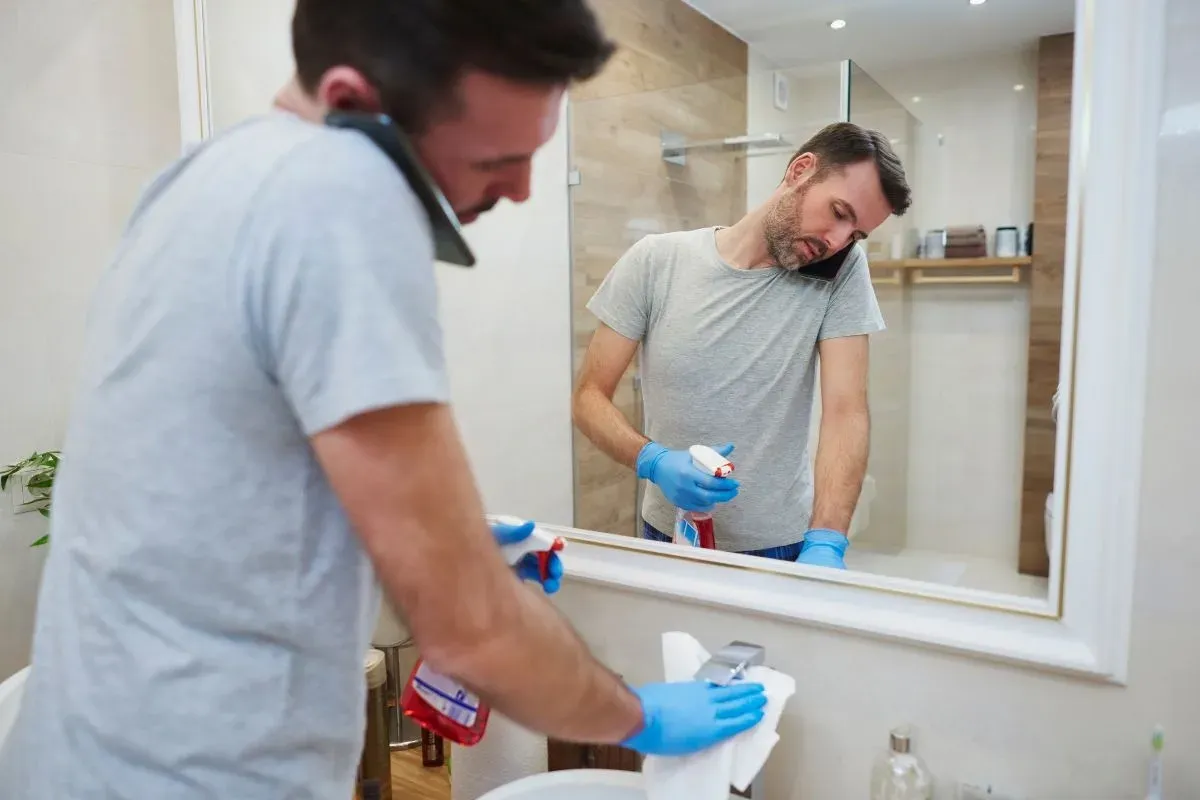
Not all bathroom cleaners are created equal. Products formulated specifically for mold and mildew, usually containing bleach, hydrogen peroxide, or EPA-registered fungicidal ingredients, kill spores rather than just removing surface residue. Using one of these once a week on tile, grout, and fixtures helps prevent regrowth between deep cleans.
Why Your Bathroom Exhaust Fan Matters More Than You Think

A bathroom exhaust fan isn't just for clearing steam off the mirror — it's one of the single most important tools for preventing mold. Without proper ventilation, humidity has nowhere to go, and it lingers on walls, ceilings, and inside cabinets long after you've left the room.
How Long to Run the Fan After a Shower
As a general rule, run your exhaust fan during your shower and for at least 20 to 30 minutes afterward, or until the mirror is fully clear and you can no longer feel dampness in the air. If your bathroom has no windows or tends to stay steamy, consider installing a timer switch or humidity-sensing fan that automatically runs the appropriate amount of time.
Signs Your Fan Isn't Doing Its Job
A fan that's undersized, clogged with dust, or improperly vented won't clear moisture effectively even if it's running. Watch for persistent condensation on mirrors or windows long after showering, a musty smell that won't go away, peeling paint or bubbling on the ceiling, and visible dust buildup on the fan cover, which restricts airflow. Any of these suggest it's time to clean, repair, or upgrade the fan.
Ideal Bathroom Humidity Levels (CDC Guidance)
The CDC recommends keeping indoor humidity between 30% and 50% to discourage mold growth. A simple hygrometer, available for under $15, can help you monitor your bathroom's humidity and confirm whether your ventilation is keeping pace with the moisture your household generates.
How to Prevent Black Mold in Bathroom Grout and Caulk
Grout and caulk are porous or seam-based materials, which makes them especially vulnerable to mold, particularly the dark, stubborn variety often referred to as black mold. Cracked or deteriorating grout allows water to seep behind tile, creating hidden pockets of moisture that are difficult to dry out and easy for mold to colonize. The same goes for caulk around the tub and shower base, where gaps let water reach the subfloor or wall material underneath.
To stay ahead of it, inspect grout lines and caulk every few months for cracking, gaps, or discoloration. Light surface mold on grout can often be cleaned with a stiff brush and a mold-specific cleaner. But once grout is cracked, crumbling, or has mold growing beneath the surface, cleaning won't solve the underlying problem — it needs to be removed and resealed. Caulk should generally be replaced every one to two years, or immediately if you notice it pulling away from the tile or tub.
Mold-Resistant Bathroom Materials Worth Considering
If mold keeps coming back no matter how diligent you are with cleaning, the materials in your bathroom may be working against you. Upgrading to mold-resistant options can dramatically reduce how much maintenance your bathroom needs going forward.
Non-porous surfaces like solid surface panels, glass, and sealed natural stone don't give mold spores anywhere to anchor, unlike traditional grout lines. Mold-resistant paint, formulated with antimicrobial additives, is a low-cost upgrade for ceilings and walls that tend to stay humid. Groutless wall systems, such as large-format tile or acrylic wall panels, eliminate the grout lines that are typically the first place mold appears. And waterproof flooring like luxury vinyl or porcelain tile with minimal seams resists moisture penetration far better than materials like natural wood-look laminate.
When Mold Signals a Bigger Problem
Sometimes mold isn't really a cleaning issue — it's a symptom of something happening behind your walls or under your floor. If mold keeps returning to the same spot shortly after you clean it, or if you notice a musty smell without any visible mold, it could point to a hidden plumbing leak, inadequate insulation causing condensation inside walls, or ventilation that was never properly designed for the size of the room. These issues won't resolve with cleaning products alone, and ignoring them can lead to structural damage over time. If you suspect a hidden leak or ventilation issue, it's worth having your bathroom professionally inspected before the problem grows.
How PHD Bathroom Remodeling Helps Prevent Mold for Good
At PHD Bathroom Remodeling, we see firsthand how often mold problems trace back to outdated materials, poor ventilation, or leaks that were never properly addressed. When we remodel a bathroom, we build in mold prevention from the start, using moisture-resistant materials, properly sized ventilation, and waterproofing details that hold up over time. If your bathroom's mold problem keeps coming back no matter what you try, we can help identify the root cause and design a space that's easier to keep mold-free for good. Reach out to schedule a consultation.
Key Takeaways
- Mold needs moisture, warmth, and organic residue to grow, so controlling humidity is the most effective form of prevention.
- Daily habits like squeegeeing surfaces and running your exhaust fan for 20-30 minutes after showering make a significant difference.
- Cracked grout and aging caulk are common entry points for black mold and should be inspected regularly.
- Mold-resistant materials like non-porous surfaces and mold-resistant paint reduce long-term maintenance.
- Recurring mold despite regular cleaning often signals a hidden leak or ventilation issue that requires professional attention.
FAQs
How do I prevent mold and mildew in my bathroom?
Control moisture by running your exhaust fan during and after showers, squeegee wet surfaces, clean regularly with mold-specific products, and repair any cracked grout or caulk promptly.
How long should I run my bathroom exhaust fan after a shower?
Run it for at least 20 to 30 minutes after showering, or until the mirror is clear and the room no longer feels damp.
What is the difference between mold and mildew in a bathroom?
Mildew is a surface-level fungus that's typically white, gray, or powdery, while mold is a broader category of fungi that can be darker, fuzzy or slimy, and grow more deeply into materials.
Can mold come back after cleaning if I don't fix the cause?
Yes. Cleaning removes visible mold, but if the underlying moisture source, like poor ventilation, cracked grout, or a hidden leak, isn't addressed, mold will likely return.
What bathroom materials resist mold the best?
Non-porous surfaces, mold-resistant paint, groutless wall systems, and waterproof flooring all help resist mold growth better than traditional porous materials like standard grout or wood-look laminate.